...SUMMER!
The beautiful spring days (20C, 70F) we've had for the past three weeks turned overnight into one hot dry summer day. The temperature today is supposed to be 30C (that's 86F). Then tomorrow, Spring is supposed to return, with cold rain.

Thursday, March 31, 2005


Tuesday, March 29, 2005
Ayzeh Mehdeenah* (1)!
*Literal translation: What a country!
Free translation: This you call a country?
Definition: An exclamation; a comment on an event, place, object, or behavior. It connotes irony, pride, wonder, delight, shame, disgust, or all of these together.
Instead of continuing a chronological narration of my move to Israel, I hope to share with you as many of my Ayzeh Mehdeenah experiences as I can remember, the ones starting from August 29, 1988, the day I landed in Israel as an olah chadasha (new immigrant). Because my memory-retrieval engine works much slower than Google's, I will post these experiences as they bubble up from the depths of my personal memory base, and, occasionally, even before they get stored there. For example, from last week...
The Best Things in Life Are (Almost) Free
4 cucumbers.....NIS 1.96
4 tomatoes........NIS 3.29
4 avocados........NIS 5.01
broccoli............NIS 5.00
red pepper..gift_______
Total................NIS15.26
Total................US $3.55 March, 2005
The First Day
On August 30, 1988, my first morning as an immigrant, I had one appointment and two errands: a welcome meeting with the "house mother" of the temporary immigrant dorm/studio apartment building, a visit to the local bank to open an account, and a visit to the local supermarket to buy groceries. This post is about groceries.
My studio apt. was in the middle of a small shopping area in Ramat Aviv, so finding the supermarket was pretty easy. It was at the end of my street. Buying food was a bit more problematic: most food packages were text-heavy, so I decided to buy only fresh vegetables and fruit, or packages I could see through (like cheese and frozen chicken), or packages with relevant pictures on them (like canned beans or spaghetti sauce). After all, it was my first day and I had plenty of time ahead to be adventurous. While waiting in line to check out, I observed that customers bagged their own groceries. OK, I could live with that. When I got home and unpacked what I'd bought, my work began: for two hours I sat, armed with calculator, alphabet diagram, and Hebrew dictionary, and translated the register-printed receipt.
Numbers are (almost) the same - hurray!
I started with the easy stuff: converting the prices from shekels to dollars, and the weighed items from grams to pounds and ounces. I was to learn later that handwritten numbers are not so easily recognized. The ones have heads, the sevens have tails, and the fours? Don't ask.
Letters are very different
I laboriously transliterated the letters when I was able to recognize them. To this day there are Hebrew letters I find difficult to distinguish from one another. In this way I looked up the English-Hebrew dictionary and browsed until I found a printed Hebrew word that could possible correspond to what I had on my cash-register receipt. It was a relief to learn that a few items were sounded familiar, like "banana."
Where are the graphics?
A marked lack of graphic cues culture-shocked me in 1988. I reflected on the history of American advertising , and realized that it had not been exported (yet). The literacy statistics in Israel are impressive...there is certainly a connection, for which I am at a disadvantage compared to an Israeli in the USA. I must "climb up" to really understand this place. I decide my aliyah must include becoming Hebrew-literate. As of 2005, I greet the "advances" in Israeli graphic communication with ambivalence. It makes it easier for me and others to navigate the culture, but it reduces the motivation to become Hebrew-literate.
Free translation: This you call a country?
Definition: An exclamation; a comment on an event, place, object, or behavior. It connotes irony, pride, wonder, delight, shame, disgust, or all of these together.
Instead of continuing a chronological narration of my move to Israel, I hope to share with you as many of my Ayzeh Mehdeenah experiences as I can remember, the ones starting from August 29, 1988, the day I landed in Israel as an olah chadasha (new immigrant). Because my memory-retrieval engine works much slower than Google's, I will post these experiences as they bubble up from the depths of my personal memory base, and, occasionally, even before they get stored there. For example, from last week...
The Best Things in Life Are (Almost) Free

4 cucumbers.....NIS 1.96
4 tomatoes........NIS 3.29
4 avocados........NIS 5.01
broccoli............NIS 5.00
red pepper..gift_______
Total................NIS15.26
Total................US $3.55 March, 2005
The First Day
On August 30, 1988, my first morning as an immigrant, I had one appointment and two errands: a welcome meeting with the "house mother" of the temporary immigrant dorm/studio apartment building, a visit to the local bank to open an account, and a visit to the local supermarket to buy groceries. This post is about groceries.
My studio apt. was in the middle of a small shopping area in Ramat Aviv, so finding the supermarket was pretty easy. It was at the end of my street. Buying food was a bit more problematic: most food packages were text-heavy, so I decided to buy only fresh vegetables and fruit, or packages I could see through (like cheese and frozen chicken), or packages with relevant pictures on them (like canned beans or spaghetti sauce). After all, it was my first day and I had plenty of time ahead to be adventurous. While waiting in line to check out, I observed that customers bagged their own groceries. OK, I could live with that. When I got home and unpacked what I'd bought, my work began: for two hours I sat, armed with calculator, alphabet diagram, and Hebrew dictionary, and translated the register-printed receipt.
Numbers are (almost) the same - hurray!
I started with the easy stuff: converting the prices from shekels to dollars, and the weighed items from grams to pounds and ounces. I was to learn later that handwritten numbers are not so easily recognized. The ones have heads, the sevens have tails, and the fours? Don't ask.
Letters are very different
I laboriously transliterated the letters when I was able to recognize them. To this day there are Hebrew letters I find difficult to distinguish from one another. In this way I looked up the English-Hebrew dictionary and browsed until I found a printed Hebrew word that could possible correspond to what I had on my cash-register receipt. It was a relief to learn that a few items were sounded familiar, like "banana."
Where are the graphics?
A marked lack of graphic cues culture-shocked me in 1988. I reflected on the history of American advertising , and realized that it had not been exported (yet). The literacy statistics in Israel are impressive...there is certainly a connection, for which I am at a disadvantage compared to an Israeli in the USA. I must "climb up" to really understand this place. I decide my aliyah must include becoming Hebrew-literate. As of 2005, I greet the "advances" in Israeli graphic communication with ambivalence. It makes it easier for me and others to navigate the culture, but it reduces the motivation to become Hebrew-literate.
Saturday, March 26, 2005
Why I Moved to Israel – Part Four: Departure Countdown
Part One
Part Two
Part Three
Several months before: a psychological checkup
I have a few therapy sessions with B, to make sure I'm not running away from psychological problems, which I knew from previous experience inevitably boomerangs. The problem I present to B: "I want to move to Israel, but my daughter thinks she is a lesbian." His brilliant answer: "You want to move to Israel. In what ways will moving to Israel affect your daughter's lesbianism?" He answers a question with a question! And he isn’t even Jewish!
Several weeks before: leaving the job
I didn't want to explain all the personal stuff I described here, here, and here, to my work colleagues, whom I didn't like, so I made up a "cover story" for them, which went like this: my father has died, and left me with many family affairs to clean up, including a business to run.
On the metaphoric level, this was completely true. I just took a little poetic license with the fact that my father had died over 25 years earlier. My boss's secretary sent me a condolence gift from the office: a beautiful potted tree, in a beautiful brass pot. I gave it to B, who had just moved to a new home.
The day before: a thwarted crime
I take the train to NYC for a haircut and a farewell luncheon with some friends. Then I get on the commuter train back to Princeton for the last time. The train is very full, it being a matinee day. I'm walking down the aisle, looking for a seat, lots of people doing the same in front of and behind me. I feel someone jostles me and then gets in front of me. I notice my wallet is missing, when it was not a few minutes earlier. I grab hold of the jostler's jacket and very intensely but quietly say to him, "Give me back my wallet." He ignores me, which convinces me that he has my wallet. I hold on to his jacket a little more firmly, and repeat in a slightly louder and more intense tone, "Give me back my wallet." We walk the length of the aisle of that crowded train car, me holding on to his jacket, him ignoring me, the seated passengers ignoring us both. The train hasn't started yet, but nobody can run, because there are so many passengers walking through in line in front of and behind us. When we get to the end of the car, me still holding onto his jacket, the pickpocket looks quickly at someone behind me, then he looks at me and nods to the floor. My wallet! I grab it, let go of his jacket and step aside. The pickpocket and his accomplice quickly jump off the train, the accomplice carrying a bulging shopping bag, no doubt full of wallets from people not bound for Israel the next day.
I feel too small for mere pickpockets: bring me giants! (My wallet still has my five dollars cash in it.)
August 28, 1988: a JFK Airport farewell
elswhere, Prowesslessness, Googleman, SIL, and friends gather in the El Al departure lounge to say goodbye. They supply a farewell feast of corned beef and pastrami sandwiches on rye bread. I am too excited to eat more than one sandwich (and a few pickles).
Part Two
Part Three
Several months before: a psychological checkup
I have a few therapy sessions with B, to make sure I'm not running away from psychological problems, which I knew from previous experience inevitably boomerangs. The problem I present to B: "I want to move to Israel, but my daughter thinks she is a lesbian." His brilliant answer: "You want to move to Israel. In what ways will moving to Israel affect your daughter's lesbianism?" He answers a question with a question! And he isn’t even Jewish!
Several weeks before: leaving the job
I didn't want to explain all the personal stuff I described here, here, and here, to my work colleagues, whom I didn't like, so I made up a "cover story" for them, which went like this: my father has died, and left me with many family affairs to clean up, including a business to run.
On the metaphoric level, this was completely true. I just took a little poetic license with the fact that my father had died over 25 years earlier. My boss's secretary sent me a condolence gift from the office: a beautiful potted tree, in a beautiful brass pot. I gave it to B, who had just moved to a new home.
The day before: a thwarted crime
I take the train to NYC for a haircut and a farewell luncheon with some friends. Then I get on the commuter train back to Princeton for the last time. The train is very full, it being a matinee day. I'm walking down the aisle, looking for a seat, lots of people doing the same in front of and behind me. I feel someone jostles me and then gets in front of me. I notice my wallet is missing, when it was not a few minutes earlier. I grab hold of the jostler's jacket and very intensely but quietly say to him, "Give me back my wallet." He ignores me, which convinces me that he has my wallet. I hold on to his jacket a little more firmly, and repeat in a slightly louder and more intense tone, "Give me back my wallet." We walk the length of the aisle of that crowded train car, me holding on to his jacket, him ignoring me, the seated passengers ignoring us both. The train hasn't started yet, but nobody can run, because there are so many passengers walking through in line in front of and behind us. When we get to the end of the car, me still holding onto his jacket, the pickpocket looks quickly at someone behind me, then he looks at me and nods to the floor. My wallet! I grab it, let go of his jacket and step aside. The pickpocket and his accomplice quickly jump off the train, the accomplice carrying a bulging shopping bag, no doubt full of wallets from people not bound for Israel the next day.
I feel too small for mere pickpockets: bring me giants! (My wallet still has my five dollars cash in it.)
August 28, 1988: a JFK Airport farewell
elswhere, Prowesslessness, Googleman, SIL, and friends gather in the El Al departure lounge to say goodbye. They supply a farewell feast of corned beef and pastrami sandwiches on rye bread. I am too excited to eat more than one sandwich (and a few pickles).
Friday, March 25, 2005

Wednesday, March 23, 2005
Why I Moved to Israel - Part Three: Princeton, a Detour?
Part One
Part Two
The year is 1985. The nest is empty. Oma has been gone for five years. Cousin Lucy is also gone. All remaining relatives from my generation live too far for a day-trip visit: Sailorman and cousins in Southern California, Googleman and SIL in their mid-Atlantic home. Elswhere is away at college and Prowesslessness is living at his Dad's, attending Stuyvesant High School. After years of being a wandering minstrel, teaching seminar/workshops, I experience teacher burnout: "why are my students asking the same questions I answered last week?" Of course they are different students, but I run out of energy for the real world. Depression takes hold, triumphing over the deseryl I've been taking. My doctor refers me to a psychopharmacologist. I find myself taking lithium. Lithium! It's common knowledge that lithium iscontra-indicated bad for people with psoriasis, but a depressed person doesn't have common knowledge. And apparently neither does this psychopharmacologist. My psoriasis gets worse. Duh. I stop taking the lithium, but the worsened skin stays worse. Goodbye psychopharmacologist, hello dermatologist.
After a few PUVA treatments, I decide a Major Change of Scene (including a new doctor and better medical insurance) might be in order. I take a job in the newly-high tech neighborhood of Princeton, NJ, and put my house on the market. At least moving will force pruning of the accumulated possessions and lighten my load o' baggage. Some of you may think there are less drastic ways to accomplish that goal, but a depressed person can be a bit heavy-handed and concrete-thinking, not to mention melodramatic.
The town of Princeton had a longstanding reputation of anti-Semitism when I first heard of it, with an exception made for outstanding scholars affiliated with the University or the Institute for Advanced Study. I found it appealing to consider bumping into the likes of Albert Einstein and Kurt Godel at the local supermarket. Except they were dead, and I didn't know what their successors looked like. The invasion of high-tech businessesreduced reshaped Princeton's inherent anti-semitism, but the town retained its pseudo-English pretensions. The downtown bus station looked like Shakespeare might run out any minute to catch a bus. The Princeton Burger King had a Tudor storefront, the result of a local brouhaha between the Princeton Town Council and the Powers of Corporate Franchising (MacDonald's wouldn't compromise on storefront cosmetics, so there was no MacDonald's).
The first weekend after my move, Prowesslessnesslessness visited. His take on the Tudor style public phone booths in Princeton was, "They look like the Department of Cutesification had a strong voice in the design." Moving to Princeton in the mid-1980's seemed to me the ultimate assimilation of a Jew into the American Mainstream, which ended up looking like a Disney version of Stratford-on-Avon.
Except. As soon as I've moved to my new white-bread, "cutesified" environment – well, not quite white-bread: the week after I move there, Princeton gets its first bagel bakery – almost everything I choose to do in my spare time is Judaism- or Israel-related. I join the Jewish Center (no "Community" in the name = no pool), I attend services weekly, I join the synagogue choir where the repertoire is an amalgam of liturgical, Israeli folk, Yiddish, Israeli modern, Ladino music, I study Hebrew, first formally once a week and then informally with three other women early mornings at the local Burger King (it's the only place open early enough for us), I learn Israeli folk dances. I develop a taste for Hazzanut. My only hobby outside the pattern is an adventure in macrobiotic eating/cooking (although all macrobiotic food is technically, if not legally, Kosher). I finally take a business-trip plus vacation to Israel and I see what I'm missing: total immersion.
So I go to the Philadelphia office of the Jewish Agency and talk to the shaliach (emissary) about moving to Israel. Only the folks at the Jewish Agency call it "making aliyah," which means "moving up." To me that sounds pretentious, but I'm beginning to learn what the claims of a community can mean: if the community calls it aliyah, I'd better get used to it. When I talk to my assimilated American friends and family, I tell them I'm thinking of moving to Israel. When I talk to my new Israeli connections, I talk about my planned aliyah. Lesson One in cross-cultural communication.
The shaliach is a pleasant kippah-wearing American-Israeli in his late 30's, who gives me a party line: "Every Jew has the right to return to Israel," but also makes it clear Israel is not really for the likes of me. Why not? I'm middle-aged, divorced, I have no family support in Israel, I don't know Hebrew, my children aren't coming with me, they'll get married, have children, and I'll be a grandmother 8,000 miles away from my grandchildren. It's not a good prospect, from his point of view.
I come away fuming: his position is age-ist, sexist, collectivist, and almost every kind of –ist that doesn't even have a prefix yet. Nevertheless, maybe he's right. Anyhow, if this guy represents my entrée to Israel, I am doomed to remain in America. Trying to make aliyah and taking on the Government of Israel while doing so seems foolish (I'm obviously not so depressed/desperate anymore). So I wait. For two more years. During which Prowesslessnesslessness goes off to college, I move again, locally this time, and my salary and work responsibilities almost double.
My American dream is ghastly: I am working regular 70-hour weeks, I don't like my colleagues, my skin shows the stress. The PUVA treatments don't help much. I feel trapped by "success," like a money-making machine, and I am certain I've reached a career dead end. The prospect of growing older, feeling sicker and emptier seems inevitable. I fantasize about sunshine and seaside. A lot. I'm having a mid-life crisis.
I read about the Dead Sea as a mecca for psoriasis sufferers, and decide to try it. It helps. I meet lots of psoriasis-buddies, and even make a "business friend" (a woman who reminds me so much of The Lioness it's spooky).
I go back to the Philadelphia Jewish Agency and – voila – the shaliach has been replaced by a shlicha (female emissary), a single 40-ish career woman on leave from her job as a news editor for Israel Radio [note: her name is Osnat Landers, and now I hear her name every morning on my radio news broadcast, getting editorial credit]. Osnat comes from a position 180 degrees from her predecessor. I ask her my initial questions, she answers them as best she can, but warns me that some of her information may be out-of-date, or may change by the time I arrive. I like her. She interviews me, looks at my resume, and decides that, despite the handicaps noted by her predecessor, I have qualities and skills that could be used to make a life in Israel. Hurray!
Summary
If I had made a mental list of things I was looking for and things I wanted to leave in 1988, it would have looked like this:
Looking for:
1. Community and its meaning to me (the Rabbi's comment stuck)
2. Personal connection to History
3. Adventure
4. Urban living
5. Physical health
Wanted to leave:
1. Cold, snowy winters
2. Career as self-definition
3. Too many consumer choices (for me, shopping is not therapy)
4. Exurban, car-based living
5. Prospect of an increasingly atomized life
But What About the Children?
Ever since I moved to Princeton, Elswhere and Prowesslessnesslessness had spent considerable college vacation time at their Dad's in Queens, closer to the cultural attractions of Manhattan and closer to their new and long-time friends. By 1988, when I decide to move to Israel, E. is a Senior, and P. is a Sophomore with a Serious Girlfriend, Pippi Bluestocking. I wonder whether they'll think of my leaving the USA as abandoning them, or whether they'll look upon it as an example of "follow your dream" living. They're likely to want to strike out on their own after college, 'cause that's how they were raised. So I won't get to see them all that much even if I stay where I am. And they might not even both end up in the same place, and then I'd have to fly from one city to another to see them. What difference would it make if I fly from Tel Aviv or from Princeton? Essentially, only money. Maybe I could even earn enough money in Israel to afford plane tickets, what with my marketable job experience.
So how did I really decide?
I was curious to learn what made Israelis so self-assured, and why, contrary to my notion of self-preservation, they rushed to their homeland every time there was a major war. I had a strong gut feeling that moving to Israel was right for me, and my best friend confirmed the feeling by saying, "What have you got to lose?" All the rest was rationalization.
It was the most drastic decision I ever made on intuition alone, and I was scared to death.
Part Two
The year is 1985. The nest is empty. Oma has been gone for five years. Cousin Lucy is also gone. All remaining relatives from my generation live too far for a day-trip visit: Sailorman and cousins in Southern California, Googleman and SIL in their mid-Atlantic home. Elswhere is away at college and Prowesslessness is living at his Dad's, attending Stuyvesant High School. After years of being a wandering minstrel, teaching seminar/workshops, I experience teacher burnout: "why are my students asking the same questions I answered last week?" Of course they are different students, but I run out of energy for the real world. Depression takes hold, triumphing over the deseryl I've been taking. My doctor refers me to a psychopharmacologist. I find myself taking lithium. Lithium! It's common knowledge that lithium is
After a few PUVA treatments, I decide a Major Change of Scene (including a new doctor and better medical insurance) might be in order. I take a job in the newly-high tech neighborhood of Princeton, NJ, and put my house on the market. At least moving will force pruning of the accumulated possessions and lighten my load o' baggage. Some of you may think there are less drastic ways to accomplish that goal, but a depressed person can be a bit heavy-handed and concrete-thinking, not to mention melodramatic.
The town of Princeton had a longstanding reputation of anti-Semitism when I first heard of it, with an exception made for outstanding scholars affiliated with the University or the Institute for Advanced Study. I found it appealing to consider bumping into the likes of Albert Einstein and Kurt Godel at the local supermarket. Except they were dead, and I didn't know what their successors looked like. The invasion of high-tech businesses
The first weekend after my move, Prowesslessnesslessness visited. His take on the Tudor style public phone booths in Princeton was, "They look like the Department of Cutesification had a strong voice in the design." Moving to Princeton in the mid-1980's seemed to me the ultimate assimilation of a Jew into the American Mainstream, which ended up looking like a Disney version of Stratford-on-Avon.
Except. As soon as I've moved to my new white-bread, "cutesified" environment – well, not quite white-bread: the week after I move there, Princeton gets its first bagel bakery – almost everything I choose to do in my spare time is Judaism- or Israel-related. I join the Jewish Center (no "Community" in the name = no pool), I attend services weekly, I join the synagogue choir where the repertoire is an amalgam of liturgical, Israeli folk, Yiddish, Israeli modern, Ladino music, I study Hebrew, first formally once a week and then informally with three other women early mornings at the local Burger King (it's the only place open early enough for us), I learn Israeli folk dances. I develop a taste for Hazzanut. My only hobby outside the pattern is an adventure in macrobiotic eating/cooking (although all macrobiotic food is technically, if not legally, Kosher). I finally take a business-trip plus vacation to Israel and I see what I'm missing: total immersion.
So I go to the Philadelphia office of the Jewish Agency and talk to the shaliach (emissary) about moving to Israel. Only the folks at the Jewish Agency call it "making aliyah," which means "moving up." To me that sounds pretentious, but I'm beginning to learn what the claims of a community can mean: if the community calls it aliyah, I'd better get used to it. When I talk to my assimilated American friends and family, I tell them I'm thinking of moving to Israel. When I talk to my new Israeli connections, I talk about my planned aliyah. Lesson One in cross-cultural communication.
The shaliach is a pleasant kippah-wearing American-Israeli in his late 30's, who gives me a party line: "Every Jew has the right to return to Israel," but also makes it clear Israel is not really for the likes of me. Why not? I'm middle-aged, divorced, I have no family support in Israel, I don't know Hebrew, my children aren't coming with me, they'll get married, have children, and I'll be a grandmother 8,000 miles away from my grandchildren. It's not a good prospect, from his point of view.
I come away fuming: his position is age-ist, sexist, collectivist, and almost every kind of –ist that doesn't even have a prefix yet. Nevertheless, maybe he's right. Anyhow, if this guy represents my entrée to Israel, I am doomed to remain in America. Trying to make aliyah and taking on the Government of Israel while doing so seems foolish (I'm obviously not so depressed/desperate anymore). So I wait. For two more years. During which Prowesslessnesslessness goes off to college, I move again, locally this time, and my salary and work responsibilities almost double.
My American dream is ghastly: I am working regular 70-hour weeks, I don't like my colleagues, my skin shows the stress. The PUVA treatments don't help much. I feel trapped by "success," like a money-making machine, and I am certain I've reached a career dead end. The prospect of growing older, feeling sicker and emptier seems inevitable. I fantasize about sunshine and seaside. A lot. I'm having a mid-life crisis.
I read about the Dead Sea as a mecca for psoriasis sufferers, and decide to try it. It helps. I meet lots of psoriasis-buddies, and even make a "business friend" (a woman who reminds me so much of The Lioness it's spooky).
I go back to the Philadelphia Jewish Agency and – voila – the shaliach has been replaced by a shlicha (female emissary), a single 40-ish career woman on leave from her job as a news editor for Israel Radio [note: her name is Osnat Landers, and now I hear her name every morning on my radio news broadcast, getting editorial credit]. Osnat comes from a position 180 degrees from her predecessor. I ask her my initial questions, she answers them as best she can, but warns me that some of her information may be out-of-date, or may change by the time I arrive. I like her. She interviews me, looks at my resume, and decides that, despite the handicaps noted by her predecessor, I have qualities and skills that could be used to make a life in Israel. Hurray!
Summary
If I had made a mental list of things I was looking for and things I wanted to leave in 1988, it would have looked like this:
Looking for:
1. Community and its meaning to me (the Rabbi's comment stuck)
2. Personal connection to History
3. Adventure
4. Urban living
5. Physical health
Wanted to leave:
1. Cold, snowy winters
2. Career as self-definition
3. Too many consumer choices (for me, shopping is not therapy)
4. Exurban, car-based living
5. Prospect of an increasingly atomized life
But What About the Children?
Ever since I moved to Princeton, Elswhere and Prowesslessnesslessness had spent considerable college vacation time at their Dad's in Queens, closer to the cultural attractions of Manhattan and closer to their new and long-time friends. By 1988, when I decide to move to Israel, E. is a Senior, and P. is a Sophomore with a Serious Girlfriend, Pippi Bluestocking. I wonder whether they'll think of my leaving the USA as abandoning them, or whether they'll look upon it as an example of "follow your dream" living. They're likely to want to strike out on their own after college, 'cause that's how they were raised. So I won't get to see them all that much even if I stay where I am. And they might not even both end up in the same place, and then I'd have to fly from one city to another to see them. What difference would it make if I fly from Tel Aviv or from Princeton? Essentially, only money. Maybe I could even earn enough money in Israel to afford plane tickets, what with my marketable job experience.
So how did I really decide?
I was curious to learn what made Israelis so self-assured, and why, contrary to my notion of self-preservation, they rushed to their homeland every time there was a major war. I had a strong gut feeling that moving to Israel was right for me, and my best friend confirmed the feeling by saying, "What have you got to lose?" All the rest was rationalization.
It was the most drastic decision I ever made on intuition alone, and I was scared to death.
Tuesday, March 22, 2005
Sticky books
udge tagged me with a quiz:
You're stuck inside Fahrenheit 451, which book do you want to be?
Crockett Johnson, Harold and the Purple Crayon
Have you ever had a crush on a fictional character?
Holden Caulfield…doesn't everybody?
The last book you bought is:
Ira Byock, M.D., Dying Well [non-fiction]
Reynolds Price, A Whole New Life [autobiography]
(I was in a bookstore in Florida, and bought two books at the same time.)
The last book youread finished reading:
Zakes Mda, Ways of Dying [fiction]
What are you currently reading?
Eliyahu M. Goldratt and Jeff Cox, The Goal [fiction]
J. Simcha Cohen, The 613th Commandment [non-fiction]
Brian Hall, I Should Be Extremely Happy in Your Company [fiction]
Niccolo Machiavelli, The Prince [non-fiction]
Adin Steinsaltz, The Talmud: A Reference Guide [non-fiction]
Dr. J. H. Hertz (Ed.), Pentateuch & Haftorahs [??????????]
Alexis de Tocqueville, Democracy in America [non-fiction]
(I keep the books I'm in the middle of reading in my bedroom, kitchen, and living room, and a paperback to take out for waiting on lines, so I'm always in the middle of at least three or four)
Five books you would take to a deserted island:
Hertz (ed.), The Pentateuch & Haftorahs
W. Shakespeare, Collected works
Chris McNab, How to Survive Anything, Anywhere
S.J.Perelman, The Best of S.J. Perelman
Lewis Glinert, The Grammar of Modern Hebrew
Three people I choose to "stick this" to and why:
elswhere because she's my daughter
HappyOrangeHour because she is my granddaughter and she's got a huge library of her own books and a library card (her 2 Moms are librarians)
Rosie Bonner because she's a promising new blogger, and why should she get off easy?
You're stuck inside Fahrenheit 451, which book do you want to be?
Crockett Johnson, Harold and the Purple Crayon
Have you ever had a crush on a fictional character?
Holden Caulfield…doesn't everybody?
The last book you bought is:
Ira Byock, M.D., Dying Well [non-fiction]
Reynolds Price, A Whole New Life [autobiography]
(I was in a bookstore in Florida, and bought two books at the same time.)
The last book you
Zakes Mda, Ways of Dying [fiction]
What are you currently reading?
Eliyahu M. Goldratt and Jeff Cox, The Goal [fiction]
J. Simcha Cohen, The 613th Commandment [non-fiction]
Brian Hall, I Should Be Extremely Happy in Your Company [fiction]
Niccolo Machiavelli, The Prince [non-fiction]
Adin Steinsaltz, The Talmud: A Reference Guide [non-fiction]
Dr. J. H. Hertz (Ed.), Pentateuch & Haftorahs [??????????]
Alexis de Tocqueville, Democracy in America [non-fiction]
(I keep the books I'm in the middle of reading in my bedroom, kitchen, and living room, and a paperback to take out for waiting on lines, so I'm always in the middle of at least three or four)
Five books you would take to a deserted island:
Hertz (ed.), The Pentateuch & Haftorahs
W. Shakespeare, Collected works
Chris McNab, How to Survive Anything, Anywhere
S.J.Perelman, The Best of S.J. Perelman
Lewis Glinert, The Grammar of Modern Hebrew
Three people I choose to "stick this" to and why:
elswhere because she's my daughter
HappyOrangeHour because she is my granddaughter and she's got a huge library of her own books and a library card (her 2 Moms are librarians)
Rosie Bonner because she's a promising new blogger, and why should she get off easy?
Friday, March 18, 2005
Why I Moved to Israel - Part Two: The Jewish Question
Part One
We all referred to my mother as "Oma" once my niece, her first grandchild, was born while my brother Googleman and SIL were living in Holland, in 1960. "Oma" is Dutch for "Savta," which is Hebrew for "Grandma."
At the time Oma moved into my house, my kids were both going to Hebrew School, as agreed with their father, to prepare for their Bat Mitzvah and Bar Mitzvah, respectively. Hebrew School at the Reform Temple we belonged to was a twice-a-week activity, one afternoon after school and once on Sunday mornings. In addition, during the several months before the big event, the celebrant was expected to attend Saturday morning services. As a single working mom, I depended on the SAHMs for the weekday Hebrew School carpool and I was on duty for the weekend mornings. Oma did not drive, but she was willing and able to help me in other ways. She was doing well on her chemotherapy: she planned menus, prepared meals, and she Was There. All the time. I wasn't always happy about that, but on balance it was a good year at home.
Work was a different story. My job had become dull and depressing. The best part about it was the location: 2 miles from home. I worked for a Division VP, one of two in residence. The two VPs hated each other's guts. The new Pres. decided to resolve their differences by getting rid of my boss, who had been my champion (the Pres. may have also fired the other one, I don't remember). At the same time, an acquaintance of mine had just started a new job in NYC as a "headhunter" and asked me if I would be her practice candidate. Her boss wanted to demonstrate how to interview job candidates and match them with clients (who paid their fee). I went to a "mock interview" with her and her boss.
The next day she called to say there was a perfect job for me, provided I was willing to travel some. I was intrigued, so it didn't take much work for her to convince me to talk to the people. After all, I did feel stuck, I had live-in help now, my kids were 13 and 11, doing well in school, the business travel was limited by contract to a manageable amount, sometimes to interesting places, never on weekends, the work was challenging (teaching intensive Systems Analysis Seminar/Workshops), the pay was adequate. The main objection was no one knew how long Oma would be able to hold her own. Oma knew as much as anyone what was at risk, and she encouraged me to accept the job offer that Spring, so I took it.
1979 was an exciting year, with a lot of new experiences. There was plenty of planning and organizing for me to do for the household to run smoothly while I was away on my trips, but on the road I was free of child care worries. I could order from Room Service! Lock my door! It was fun to be in working-adult mode for days at a time, and I assuaged my guilt about being an absentee mother by focusing on the opportunity the kids were getting to know their grandmother without me around. She was a gracious, soft, sharp-witted, sensible, and competent lady. In fact, she was classy and lovely. And she loved them.
The local hospice program had started a pilot program, with home hospice services only. Home hospice meant the patient lived at home with a Primary Care Person (me), and was supported by a visiting nurse-practitioner and a social worker. The rules for signing up were three: 1) the patient had to know she had a terminal illness, 2) the doctor had to officially sign the patient over, and 3) there had to be a prognosis of four months or less. I felt ghoulish regularly asking the oncologist whether it was time to sign Mom up for hospice, but I was afraid if I didn't keep asking, he wouldn't initiate the process. Finally, in June 1980, after a couple of months of her feeling less and less well, and one nasty week in the hospital for radiation (why? I'll never know), the oncologist said, in a kind of grudging way, "I guess she has as much chance of living four months as anyone," and he signed her up for home hospice.
That July the kids left for camp and a platoon of home health aides started invading my house: first they came in for 6 hours a day, then 8, with additional overnight shifts when I traveled. Oma became very fond of one of the daytime home health aides, Christine, the most experienced one of all. Christine was a European-born war bride (WWII); she told me she always kept a supply of food in her car trunk, memories of hunger in Alsace during the war. She and Oma watched soap operas together and chatted away the afternoons. We wanted Christine on duty as much as possible, and as she enjoyed her work with Oma too, she saved more of her time for us.
During this period, Oma was getting weaker and weaker, and began to need round-the-clock assistance; she could no longer get out of bed or walk by herself. A second platoon of aides was brought in for the weekends. I was barely able to keep track of who was coming and who was going, but I did manage to make it to work, usually (unless one of the aides didn't show up – one awful time and I had to send a surly, negligent one away). My niece had given up her college summer to stay with Oma, so it was safe for me to teach a workshop in England that month, and although they had the coldest, rainiest summer week I'd even seen, it matched my mood, and I was grateful for the break.
Ricky, our beloved nurse-practitioner, made regular and on-call home visits. I remember one of her visits that summer: it must have been August, because my two brothers and SIL and I were all on the back porch while Ricky gave us a lesson administering shots, each of us practicing on an orange. We then drank a toast together, using the water-logged orange juice mixed with vodka.
Occasionally a nun from the hospice program visited. Having been fostered with a Catholic family in Belgium when she was little, Oma was comfortable with nuns, and she liked this one especially. Oma was trying both to maintain lucidity and manage pain, sometimes successfully, sometimes not. She knew she was dying, but mostly she and I talked about her life, her memories. She remarked that my life didn't look any easier than hers, even though I had so many more resources. She worried that no one would look after Cousin Lucy (the one who gave me the spoon). One day she asked to see the Rabbi. I was astonished. Oma had never, in all the time I knew her, set foot in a synagogue until she moved to my house. She may or may not have attended my brothers' Bar Mitzvahs (I know, it should probably be Bnai Mitzvot, but back then I didn't know any Hebrew). I was very young and didn't go either. Her request for the Rabbi made me think maybe the nun had inspired her to make some sort of final accommodation with the Higher Power(s).
The Rabbi came. He knew Oma from elswhere's Bat Mitzvah, so it wasn't their introductory meeting, but it was their first private one. I asked Oma if she wanted me to leave them alone, and she said no, she wanted me to stay with them in her room. Then she said to him, "I'm worried about my daughter after I'm gone. She's so alone." I was certain she was asking the Rabbi to find me a husband! I was so touched and embarrassed. But the Rabbi's reply was also a surprise: he said, "She's not alone. She has the whole Jewish community available to her, if she chooses to take advantage of it." I don't think that answer satisfied my mother, but it set me thinking about community, and I realized I had no idea what he was talking about. Up until that moment, I thought "community" meant "neighborhood," and "The Jewish Community" was a place that had a "Center" with a gym, a pool, and a nursery school. Had my culturally-rich, New York City-based life left something out?
Upon leaving my house, the Rabbi told me he was amazed to come upon such an old-fashioned deathbed situation in his young congregation, and was interested to hear about the home hospice program. It was clear he liked the idea.
(When I made aliyah eight years later, I wrote to that Rabbi and thanked him for his words that day. He replied with more encouraging words.)
Then one day Oma confided to Christine that she wanted to have a party the night before she died, but she didn't know which night that would be. Christine suggested that she have a party every night, and they announced the decision. Her "party" consisted of party hats for all visitors, Mother's brand gefilte fish (her choice!) and vodka gimlets. Those parties were the most memorably bittersweet events of my life.
Googleman and my SIL had been coming up every weekend. The social worker, who was a pill, had made it clear early on that I had undertaken too much responsibility, but at least she organized Sailorman to commit to a turn for a week in early August, to give me a week's vacation while the children were away. August came, and Sailorman came on duty with the two platoons of round-the-clock health aides plus a housekeeper, while I went to a summer choral workshop in Vermont. Sailorman later told me that it was the hardest week of his life, but also the best. I found great solace in music, as always.
Just before I left, Oma, who was quite weak by now, asked me what funeral arrangement had been made. I hold her "the boys" (her sons) had made the arrangements at a funeral home she knew in Manhattan. She winced and said, "Oh, such a long trip." I held my breath. She didn't laugh, so I didn't either. She was too exhausted to even notice humor, so I just babbled on about how it would be easier for her non-driving friends to attend.
When I returned from Vermont, Oma went into a coma (no, it doesn't really rhyme). Sailorman was there. Googleman and my SIL came the next day. My son's camp session ended the third day; he got home in time to say goodbye to his grandmother, and she revived just to say goodbye to him. Christine advised no more aides, their work was done: we should be family alone together for the end, which would only be in another day or two. We set up a round-the-clock rotating vigil, I heard my first "death rattle" in Oma's breathing, and she died peacefully on my SIL's watch.
The Rabbi came with us on the "long trip" to the funeral. He was taken aback when we told him that Oma definitely wanted to be cremated. She and my Dad had bought niches in a cemetary columbarium together decades ago, and Dad's ashes were already there. "It's not the Jewish way." But none of us was about to go against her wishes, so the Rabbi said he would lead the funeral home memorial service but not the cremation. OK, fine. After our eulogies, the Rabbi had a change of heart, and came with us to lead the Kaddish too.
We all referred to my mother as "Oma" once my niece, her first grandchild, was born while my brother Googleman and SIL were living in Holland, in 1960. "Oma" is Dutch for "Savta," which is Hebrew for "Grandma."
At the time Oma moved into my house, my kids were both going to Hebrew School, as agreed with their father, to prepare for their Bat Mitzvah and Bar Mitzvah, respectively. Hebrew School at the Reform Temple we belonged to was a twice-a-week activity, one afternoon after school and once on Sunday mornings. In addition, during the several months before the big event, the celebrant was expected to attend Saturday morning services. As a single working mom, I depended on the SAHMs for the weekday Hebrew School carpool and I was on duty for the weekend mornings. Oma did not drive, but she was willing and able to help me in other ways. She was doing well on her chemotherapy: she planned menus, prepared meals, and she Was There. All the time. I wasn't always happy about that, but on balance it was a good year at home.
Work was a different story. My job had become dull and depressing. The best part about it was the location: 2 miles from home. I worked for a Division VP, one of two in residence. The two VPs hated each other's guts. The new Pres. decided to resolve their differences by getting rid of my boss, who had been my champion (the Pres. may have also fired the other one, I don't remember). At the same time, an acquaintance of mine had just started a new job in NYC as a "headhunter" and asked me if I would be her practice candidate. Her boss wanted to demonstrate how to interview job candidates and match them with clients (who paid their fee). I went to a "mock interview" with her and her boss.
The next day she called to say there was a perfect job for me, provided I was willing to travel some. I was intrigued, so it didn't take much work for her to convince me to talk to the people. After all, I did feel stuck, I had live-in help now, my kids were 13 and 11, doing well in school, the business travel was limited by contract to a manageable amount, sometimes to interesting places, never on weekends, the work was challenging (teaching intensive Systems Analysis Seminar/Workshops), the pay was adequate. The main objection was no one knew how long Oma would be able to hold her own. Oma knew as much as anyone what was at risk, and she encouraged me to accept the job offer that Spring, so I took it.
1979 was an exciting year, with a lot of new experiences. There was plenty of planning and organizing for me to do for the household to run smoothly while I was away on my trips, but on the road I was free of child care worries. I could order from Room Service! Lock my door! It was fun to be in working-adult mode for days at a time, and I assuaged my guilt about being an absentee mother by focusing on the opportunity the kids were getting to know their grandmother without me around. She was a gracious, soft, sharp-witted, sensible, and competent lady. In fact, she was classy and lovely. And she loved them.
The local hospice program had started a pilot program, with home hospice services only. Home hospice meant the patient lived at home with a Primary Care Person (me), and was supported by a visiting nurse-practitioner and a social worker. The rules for signing up were three: 1) the patient had to know she had a terminal illness, 2) the doctor had to officially sign the patient over, and 3) there had to be a prognosis of four months or less. I felt ghoulish regularly asking the oncologist whether it was time to sign Mom up for hospice, but I was afraid if I didn't keep asking, he wouldn't initiate the process. Finally, in June 1980, after a couple of months of her feeling less and less well, and one nasty week in the hospital for radiation (why? I'll never know), the oncologist said, in a kind of grudging way, "I guess she has as much chance of living four months as anyone," and he signed her up for home hospice.
That July the kids left for camp and a platoon of home health aides started invading my house: first they came in for 6 hours a day, then 8, with additional overnight shifts when I traveled. Oma became very fond of one of the daytime home health aides, Christine, the most experienced one of all. Christine was a European-born war bride (WWII); she told me she always kept a supply of food in her car trunk, memories of hunger in Alsace during the war. She and Oma watched soap operas together and chatted away the afternoons. We wanted Christine on duty as much as possible, and as she enjoyed her work with Oma too, she saved more of her time for us.
During this period, Oma was getting weaker and weaker, and began to need round-the-clock assistance; she could no longer get out of bed or walk by herself. A second platoon of aides was brought in for the weekends. I was barely able to keep track of who was coming and who was going, but I did manage to make it to work, usually (unless one of the aides didn't show up – one awful time and I had to send a surly, negligent one away). My niece had given up her college summer to stay with Oma, so it was safe for me to teach a workshop in England that month, and although they had the coldest, rainiest summer week I'd even seen, it matched my mood, and I was grateful for the break.
Ricky, our beloved nurse-practitioner, made regular and on-call home visits. I remember one of her visits that summer: it must have been August, because my two brothers and SIL and I were all on the back porch while Ricky gave us a lesson administering shots, each of us practicing on an orange. We then drank a toast together, using the water-logged orange juice mixed with vodka.
Occasionally a nun from the hospice program visited. Having been fostered with a Catholic family in Belgium when she was little, Oma was comfortable with nuns, and she liked this one especially. Oma was trying both to maintain lucidity and manage pain, sometimes successfully, sometimes not. She knew she was dying, but mostly she and I talked about her life, her memories. She remarked that my life didn't look any easier than hers, even though I had so many more resources. She worried that no one would look after Cousin Lucy (the one who gave me the spoon). One day she asked to see the Rabbi. I was astonished. Oma had never, in all the time I knew her, set foot in a synagogue until she moved to my house. She may or may not have attended my brothers' Bar Mitzvahs (I know, it should probably be Bnai Mitzvot, but back then I didn't know any Hebrew). I was very young and didn't go either. Her request for the Rabbi made me think maybe the nun had inspired her to make some sort of final accommodation with the Higher Power(s).
The Rabbi came. He knew Oma from elswhere's Bat Mitzvah, so it wasn't their introductory meeting, but it was their first private one. I asked Oma if she wanted me to leave them alone, and she said no, she wanted me to stay with them in her room. Then she said to him, "I'm worried about my daughter after I'm gone. She's so alone." I was certain she was asking the Rabbi to find me a husband! I was so touched and embarrassed. But the Rabbi's reply was also a surprise: he said, "She's not alone. She has the whole Jewish community available to her, if she chooses to take advantage of it." I don't think that answer satisfied my mother, but it set me thinking about community, and I realized I had no idea what he was talking about. Up until that moment, I thought "community" meant "neighborhood," and "The Jewish Community" was a place that had a "Center" with a gym, a pool, and a nursery school. Had my culturally-rich, New York City-based life left something out?
Upon leaving my house, the Rabbi told me he was amazed to come upon such an old-fashioned deathbed situation in his young congregation, and was interested to hear about the home hospice program. It was clear he liked the idea.
(When I made aliyah eight years later, I wrote to that Rabbi and thanked him for his words that day. He replied with more encouraging words.)
Then one day Oma confided to Christine that she wanted to have a party the night before she died, but she didn't know which night that would be. Christine suggested that she have a party every night, and they announced the decision. Her "party" consisted of party hats for all visitors, Mother's brand gefilte fish (her choice!) and vodka gimlets. Those parties were the most memorably bittersweet events of my life.
Googleman and my SIL had been coming up every weekend. The social worker, who was a pill, had made it clear early on that I had undertaken too much responsibility, but at least she organized Sailorman to commit to a turn for a week in early August, to give me a week's vacation while the children were away. August came, and Sailorman came on duty with the two platoons of round-the-clock health aides plus a housekeeper, while I went to a summer choral workshop in Vermont. Sailorman later told me that it was the hardest week of his life, but also the best. I found great solace in music, as always.
Just before I left, Oma, who was quite weak by now, asked me what funeral arrangement had been made. I hold her "the boys" (her sons) had made the arrangements at a funeral home she knew in Manhattan. She winced and said, "Oh, such a long trip." I held my breath. She didn't laugh, so I didn't either. She was too exhausted to even notice humor, so I just babbled on about how it would be easier for her non-driving friends to attend.
When I returned from Vermont, Oma went into a coma (no, it doesn't really rhyme). Sailorman was there. Googleman and my SIL came the next day. My son's camp session ended the third day; he got home in time to say goodbye to his grandmother, and she revived just to say goodbye to him. Christine advised no more aides, their work was done: we should be family alone together for the end, which would only be in another day or two. We set up a round-the-clock rotating vigil, I heard my first "death rattle" in Oma's breathing, and she died peacefully on my SIL's watch.
The Rabbi came with us on the "long trip" to the funeral. He was taken aback when we told him that Oma definitely wanted to be cremated. She and my Dad had bought niches in a cemetary columbarium together decades ago, and Dad's ashes were already there. "It's not the Jewish way." But none of us was about to go against her wishes, so the Rabbi said he would lead the funeral home memorial service but not the cremation. OK, fine. After our eulogies, the Rabbi had a change of heart, and came with us to lead the Kaddish too.
Thursday, March 17, 2005
Why I Moved to Israel - Part One: All About my Mother
In thinking yet again about why/how I moved to Israel, I realized I had to reach back before the decision to find where the seeds were planted. Then I came across this blog and it mobilized me (along with polite reminders from Noorster, The Lioness, and Smartmom) that some of you out there are really waiting...and very patient you are). This is a long story, so settle in with your favorite beverage.
I've described my mother's background here. She became a widow at 64, and although my dad's death was a shock (he died of a massive heart attack, his first, while taking an afternoon nap), she weathered the blow well, lived independently, and stayed healthy until her late 70's. In 1977 she began to feel fatigued and I noticed when I visited that her house was kind of dark. When she went to the doctor, he diagnosed anemia and prescribed iron. It helped, but not much.
When she returned to her doctor for follow-up she was still weak, and he sent her to the local hospital in Queens for tests. They gave her a blood transfusion, and she felt a bit better, but they didn't have a definitive diagnosis, so she was transferred to Mt. Sinai Hospital in New York City. Most of her long-time neighbors had moved to Florida by then, so she had very few visitors. One fairly new neighbor, an Orthodox Jew, came to see her. His visit was extremely comforting to both of us. At the time, my brother Googleman and his family were traveling in China, and my older brother Sailorman was living in California, so I got to be the main decision-maker. I was 40, a divorced "head of household" in New Jersey, and my kids were 11 and 9 years old.
It didn't take the folks at Mt. Sinai long to discover a malignant lump under her arm. She was 80 years old.
They didn't tell her she had cancer; they told her she had a "growth." I got more information in private from the doctor, because I asked blunt questions: Is it cancer? Yes. What's the prognosis? Cancer in old people grows slowly. How long has she got? They hedged, hemmed, and hawed. I figured from all the hemming and hawing that aggressive measures were not likely to give any good results. The cancer had metasticized. They couldn't determine the origin. Wow.
During this period I felt alternately either angry for not getting more direct answers or grateful for the time and space to figure things out for myself. Googleman and his family returned from their trip, so we met to discuss the situation.
After a week or two we were supposed to meet the hospital social worker to agree on a Discharge Plan. Googleman made the three-hour journey from his home to Mt. Sinai, and I made a one-hour journey. The social worker didn't show, having cancelled at the last minute. Not good. Googleman and I had our own Discharge Plan meeting. Mom was feeling well enough to go home, with a practical nurse in attendance, and start some chemotherapy. But, given a prognosis of a very slow decline, she would have to adjust to giving up independent living at home. Both Googleman and I wanted her to come live in our homes, knowing that meant being responsible for managing her care until the end. It was a serious time.
I had many reasons for wanting my Mom to spend her last years with me, but the most pressing one was to save her from the "heroic" treatments which were standard for cancer patients back then. I was certain they would cause her needless suffering and no cure. Mom had made it clear to us over the years she would never want that. Googleman's father-in-law had died a most agonizing death 15 years earlier, from prostate cancer, during which every conceivable procedure had been done to keep him alive, and Googleman's mother-in-law had spent every day of his last months at his side in the hospital, watching him suffer more and more. In the end, soon after he died, she committed suicide. They were both in their 60's at the time.
From that experience, we were alerted to new and different way of treating terminal illnesses: palliative care or hospice. Luckily, soon after my mom went home from Mt. Sinai, Dr. Cicely Saunders herself gave a talk at NY Hospital about her work in London at St. Christopher Hospice, the first modern hospice, and showed a documentary film. Although it was a new concept, and at the time of Dr. Saunders' talk there was only one hospice in the USA, in Connecticut, it was exactly what I wanted for my mom and I had a hunch (actually more of a hope, a need, and a prayer) there would be more hospices available in the area where I lived by the time we needed it.
It could not have been easy for my mom to come to terms with having to leave her home of 37 years, but at least she had some consolation: both her married children wanted her. Sailorman is a bachelor, and although he had recently retired and was therefore free to care for her, he was also the least equipped and experienced in caring for others. Plus he lived in California, which would really uproot her and make it impossible for her remaining friends to visit. Googleman lived on the East Coast, and we had two children each. His were already in college, and Mom decided to move in with me because she felt she would be more useful to me, the single working mother with younger children at home. I liked her positive attitude, although I knew her usefulness would become more and more limited as her health declined.
There were plenty more logistics to deal with: my priorities were to find a hospice, a hospice-friendly oncologist, and to remodel parts of my house to accommodate my mom. Even though all they could offer was dreadful treatment to prolong agony, many doctors then were not willing to giving up control of cancer patients to palliative care. Pain management was an infant specialty.
My next-door neighbor in New Jersey was a nurse at a nearby hospital, and she told me her hospital was going to start a pilot home hospice program the following year. Perfect! I felt God was on my side (the nurse's husband was an Episcopalian minister). I called the hospice program director to get the name of the most cooperative oncologist they would be working with. Either because of bureaucracy or professional ethics she couldn't recommend one doctor, but she could give me three names, so I would have to choose. I asked a lot of questions about each one until I could suss out which one she really liked the best. Lucky for me she felt as stifled by the restriction as I did, so I got the information I wanted.
My house had a hybrid design: split-level on one side, classic two-storey plus attic on the other. The children occupied the two lower bedrooms. The larger downstairs bedroom made more sense for my mom. I got independent contractor/carpenter to finish the attic so one of the kids could move up there. My daughter got first choice on the "attic suite," because she is the oldest and had the smallest bedroom, but she rejected it. She didn't like the idea of tramping through my bedroom to use the bathroom. Her brother, on the other hand, was thrilled: he loved the idea of moving to the highest room in the house.
While the attic refinishing was going on, I took wallpaper samples, carpet samples, and paint color samples to my mom. Being ill was taking away so much of mom's autonomy that any choices she could make became increasingly valuable. Her decorating choices created a room in my house that looked astonishingly like a room from her own house: beige carpeting, celery-colored walls, striped floral wallpaper. It took Mom several months to sell her house and choose what to bring with her. Googleman came up to help her on weekends.
Conventional wisdom has it that you paint a room first, then wallpaper, then carpet. Makes sense. The attic had to be finished before my son could vacate his bedroom for painting the week before mom was moving in. But the painter didn't show up on his appointed day, and the paperhanger was booked, so the carpet went in first, then the paperhanger did his thing, and the last-minute replacement painter was still putting a second coat on the windowsills when the moving van arrived! Googleman had been helping Mom at her house, and called when they were ready to leave, on schedule: I said, "Go very slowly, get lost even!" But they didn't. And there were no breakdowns on the GW Bridge that day, for a change. Never mind. We were now a three-generation household.
I've described my mother's background here. She became a widow at 64, and although my dad's death was a shock (he died of a massive heart attack, his first, while taking an afternoon nap), she weathered the blow well, lived independently, and stayed healthy until her late 70's. In 1977 she began to feel fatigued and I noticed when I visited that her house was kind of dark. When she went to the doctor, he diagnosed anemia and prescribed iron. It helped, but not much.
When she returned to her doctor for follow-up she was still weak, and he sent her to the local hospital in Queens for tests. They gave her a blood transfusion, and she felt a bit better, but they didn't have a definitive diagnosis, so she was transferred to Mt. Sinai Hospital in New York City. Most of her long-time neighbors had moved to Florida by then, so she had very few visitors. One fairly new neighbor, an Orthodox Jew, came to see her. His visit was extremely comforting to both of us. At the time, my brother Googleman and his family were traveling in China, and my older brother Sailorman was living in California, so I got to be the main decision-maker. I was 40, a divorced "head of household" in New Jersey, and my kids were 11 and 9 years old.
It didn't take the folks at Mt. Sinai long to discover a malignant lump under her arm. She was 80 years old.
They didn't tell her she had cancer; they told her she had a "growth." I got more information in private from the doctor, because I asked blunt questions: Is it cancer? Yes. What's the prognosis? Cancer in old people grows slowly. How long has she got? They hedged, hemmed, and hawed. I figured from all the hemming and hawing that aggressive measures were not likely to give any good results. The cancer had metasticized. They couldn't determine the origin. Wow.
During this period I felt alternately either angry for not getting more direct answers or grateful for the time and space to figure things out for myself. Googleman and his family returned from their trip, so we met to discuss the situation.
After a week or two we were supposed to meet the hospital social worker to agree on a Discharge Plan. Googleman made the three-hour journey from his home to Mt. Sinai, and I made a one-hour journey. The social worker didn't show, having cancelled at the last minute. Not good. Googleman and I had our own Discharge Plan meeting. Mom was feeling well enough to go home, with a practical nurse in attendance, and start some chemotherapy. But, given a prognosis of a very slow decline, she would have to adjust to giving up independent living at home. Both Googleman and I wanted her to come live in our homes, knowing that meant being responsible for managing her care until the end. It was a serious time.
I had many reasons for wanting my Mom to spend her last years with me, but the most pressing one was to save her from the "heroic" treatments which were standard for cancer patients back then. I was certain they would cause her needless suffering and no cure. Mom had made it clear to us over the years she would never want that. Googleman's father-in-law had died a most agonizing death 15 years earlier, from prostate cancer, during which every conceivable procedure had been done to keep him alive, and Googleman's mother-in-law had spent every day of his last months at his side in the hospital, watching him suffer more and more. In the end, soon after he died, she committed suicide. They were both in their 60's at the time.
From that experience, we were alerted to new and different way of treating terminal illnesses: palliative care or hospice. Luckily, soon after my mom went home from Mt. Sinai, Dr. Cicely Saunders herself gave a talk at NY Hospital about her work in London at St. Christopher Hospice, the first modern hospice, and showed a documentary film. Although it was a new concept, and at the time of Dr. Saunders' talk there was only one hospice in the USA, in Connecticut, it was exactly what I wanted for my mom and I had a hunch (actually more of a hope, a need, and a prayer) there would be more hospices available in the area where I lived by the time we needed it.
It could not have been easy for my mom to come to terms with having to leave her home of 37 years, but at least she had some consolation: both her married children wanted her. Sailorman is a bachelor, and although he had recently retired and was therefore free to care for her, he was also the least equipped and experienced in caring for others. Plus he lived in California, which would really uproot her and make it impossible for her remaining friends to visit. Googleman lived on the East Coast, and we had two children each. His were already in college, and Mom decided to move in with me because she felt she would be more useful to me, the single working mother with younger children at home. I liked her positive attitude, although I knew her usefulness would become more and more limited as her health declined.
There were plenty more logistics to deal with: my priorities were to find a hospice, a hospice-friendly oncologist, and to remodel parts of my house to accommodate my mom. Even though all they could offer was dreadful treatment to prolong agony, many doctors then were not willing to giving up control of cancer patients to palliative care. Pain management was an infant specialty.
My next-door neighbor in New Jersey was a nurse at a nearby hospital, and she told me her hospital was going to start a pilot home hospice program the following year. Perfect! I felt God was on my side (the nurse's husband was an Episcopalian minister). I called the hospice program director to get the name of the most cooperative oncologist they would be working with. Either because of bureaucracy or professional ethics she couldn't recommend one doctor, but she could give me three names, so I would have to choose. I asked a lot of questions about each one until I could suss out which one she really liked the best. Lucky for me she felt as stifled by the restriction as I did, so I got the information I wanted.
My house had a hybrid design: split-level on one side, classic two-storey plus attic on the other. The children occupied the two lower bedrooms. The larger downstairs bedroom made more sense for my mom. I got independent contractor/carpenter to finish the attic so one of the kids could move up there. My daughter got first choice on the "attic suite," because she is the oldest and had the smallest bedroom, but she rejected it. She didn't like the idea of tramping through my bedroom to use the bathroom. Her brother, on the other hand, was thrilled: he loved the idea of moving to the highest room in the house.
While the attic refinishing was going on, I took wallpaper samples, carpet samples, and paint color samples to my mom. Being ill was taking away so much of mom's autonomy that any choices she could make became increasingly valuable. Her decorating choices created a room in my house that looked astonishingly like a room from her own house: beige carpeting, celery-colored walls, striped floral wallpaper. It took Mom several months to sell her house and choose what to bring with her. Googleman came up to help her on weekends.
Conventional wisdom has it that you paint a room first, then wallpaper, then carpet. Makes sense. The attic had to be finished before my son could vacate his bedroom for painting the week before mom was moving in. But the painter didn't show up on his appointed day, and the paperhanger was booked, so the carpet went in first, then the paperhanger did his thing, and the last-minute replacement painter was still putting a second coat on the windowsills when the moving van arrived! Googleman had been helping Mom at her house, and called when they were ready to leave, on schedule: I said, "Go very slowly, get lost even!" But they didn't. And there were no breakdowns on the GW Bridge that day, for a change. Never mind. We were now a three-generation household.
Sunday, March 13, 2005
Walking the Dog
Today was a nice day, not hot, not cold, a few clouds. In addition to the usual checklist of items before leaving the house for "Shuki's" walk - keys, pooping paper, cellphone, trash for the big green bin outside - I decided to bring my camera along. I thought I would try to show my Tel Aviv, especially for those of you dear readers who have never been here, and possible will never visit. This is all setting the stage for my big oeuvre (in progress) on why and how I came to live here. When I read a mystery, I usually check to see whodoneit when I'm about halfway through, so I can enjoy the writer's skill building up the suspense and planting clues from that point in the story. So why not start my saga of moving to Israel at the end? That is, the end so far...walking my dog today. You can see more photos from the walk at
http://www.flickr.com/photos/savtadotty/
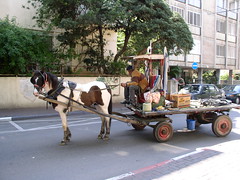
http://www.flickr.com/photos/savtadotty/
Thursday, March 10, 2005
Savta Dotty's Treasure House (5)
Welcome to Savta Dotty's Treasure House! It is chock full of things you have never seen before, and probably never even heard of! Wow!
What with all this talk about foreign accents, here is Savta Dotty's own French Medal.
Savta Dotty enjoyed her French studies so much that she spent a college summer living with a family in France. The family didn't speak any English at all. By the end of that summer, Savta Dotty was thinking and dreaming in French. She has yet to reach that level of fluency in Hebrew :-(
How many people do you know who have a 50-year-old medal for High School French?
That's why her French Medal is one of Savta dotty's Treasures.
Ya'll come back real soon to see more Treasures!
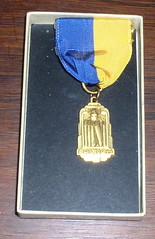
What with all this talk about foreign accents, here is Savta Dotty's own French Medal.
Savta Dotty enjoyed her French studies so much that she spent a college summer living with a family in France. The family didn't speak any English at all. By the end of that summer, Savta Dotty was thinking and dreaming in French. She has yet to reach that level of fluency in Hebrew :-(
How many people do you know who have a 50-year-old medal for High School French?
That's why her French Medal is one of Savta dotty's Treasures.
Ya'll come back real soon to see more Treasures!
Tuesday, March 08, 2005
Everyone is Mortal
Not that I have any life-threatening conditions, but you never know. And since my middle bro died while walking to work, two minutes' distance from home, in his 60's, and my dad took a nap and never woke up, also in his 60's, I figure it could happen. So here's what I want you all to know...I've had a wonderful life, keep on blogging, the Seculife alarm company phone number is 1-700-505066, and a copy of my will is in the "W" folder in the bottom drawer of the filing cabinet.
Please take this post at face value; I didn't write it to be melodramatic or to scare anyone. Just to make myself feel good. And I do.
Please take this post at face value; I didn't write it to be melodramatic or to scare anyone. Just to make myself feel good. And I do.
Monday, March 07, 2005
Seeing My World Through a Visitor's Eyes
Yesterday was spent with visitors from London. H and B arrived on Friday, so they think Sunday is part of the weekend, and they are here for a week. H was born in Israel, we met at work before he left in 1997 for greener pastures. B is from Scotland, but this is not his first trip. Whenever H visits, I look at Tel Aviv and try to visualize it in time-stopped images, try to highlight every thing that changed since his last visit: the new landscaping of the boulevards with separate bike and pedestrian paths, more and more restored Bauhaus buildings, more Dead Sea product shops on Sheinkin Street. We play a little game about what will happen "when peace comes," getting more and more fanciful and outrageous: "Tel Aviv will be more luxurious than Dubai," says B, whose grandfather was a British soldier during the Mandate period. I listen and hear the changes that have taken place in H's English: it now has a Scottish lilt.
The weather was most cooperative, so we went for a walk. The tayelet (paved promenade along the beachfront) now goes continuously from Tel Aviv to Jaffa, past the infamous Dolphinarium, past the Lehi museum building (my favorite), stopping at a beachside cafe I'd never been to for rest and surprisingly good refreshments, finally into Jaffa past a photographer with a wedding party posing the bride against a backdrop of the Tel Aviv skyline. B has never seen that statue of the whale where Jonah used to live, and I had never before seen the new luxury apartment complex just outside the Old City. (Sorry I didn't bring my camera along on this walk.)
I try to remember how it looked and felt 16 years ago, when it was all new and unfamiliar to me and I was filled with worries: would I find an apartment, would I learn the language, would I find work, would I make friends. I have now lived in my Tel Aviv home longer than any place else. I'm so glad I took a chance. I hope H comes back again soon.
The weather was most cooperative, so we went for a walk. The tayelet (paved promenade along the beachfront) now goes continuously from Tel Aviv to Jaffa, past the infamous Dolphinarium, past the Lehi museum building (my favorite), stopping at a beachside cafe I'd never been to for rest and surprisingly good refreshments, finally into Jaffa past a photographer with a wedding party posing the bride against a backdrop of the Tel Aviv skyline. B has never seen that statue of the whale where Jonah used to live, and I had never before seen the new luxury apartment complex just outside the Old City. (Sorry I didn't bring my camera along on this walk.)
I try to remember how it looked and felt 16 years ago, when it was all new and unfamiliar to me and I was filled with worries: would I find an apartment, would I learn the language, would I find work, would I make friends. I have now lived in my Tel Aviv home longer than any place else. I'm so glad I took a chance. I hope H comes back again soon.
Saturday, March 05, 2005
Blogging for Exorcism
Blogging all about my cold resulted in the casting out of evil spirits and vapours from my body in only two days instead of the usual seven! Thank you commentors! Thank you lurkers who refrained from commenting! I hope those toxic powers were weakened by the Forces of Blogospheric Dispersal and ground into organic inert dust (now you know why Chemistry was not my best subject) - may they remain A Thousand Points of History!
The cold miraculously disappeared just in time for another visit from the Relatives from Outer Space, more accurately the most childish of them: the father. The Estranged Wife has returned from abroad to claim some visitation time with the daughters, and the custodial father suddenly had a free weekend. Memories of joyous Shabbat meals and home-baked apple pies chez Savtadotty flooded his being, and lo! he betook himself for a brief overnight visit to Tel Aviv during which he: babbled incessantly during the TV showing of "The Pelican Brief" which he had recommended we watch, spilled alcohol-laden mouthwash over my favorite piece of rosewood furniture, thereby removing the finish, left every light on in every room whenever we went out, insisted he be left alone to work for a few hours but then pouted that I was going to a movie without him, even though he wanted to see it with his daughter!
So for a two-hour interlude I saw "Million Dollar Baby" without interruption, and pretended you-know-who was the punching bag. As for the movie itself, Clint Eastwood isn't my dream leading man (even though he is the right age), and watching women beat each other up isn't any more interesting to me than watching men beat each other up, so I went to a movie about boxing only because it won those Academy Awards and a friend wanted to go just at the time I needed to escape from my houseguest: if I were giving awards, I would give that film an award for lighting, and for Morgan Freeman's voice. Next week: "Ray."
The cold miraculously disappeared just in time for another visit from the Relatives from Outer Space, more accurately the most childish of them: the father. The Estranged Wife has returned from abroad to claim some visitation time with the daughters, and the custodial father suddenly had a free weekend. Memories of joyous Shabbat meals and home-baked apple pies chez Savtadotty flooded his being, and lo! he betook himself for a brief overnight visit to Tel Aviv during which he: babbled incessantly during the TV showing of "The Pelican Brief" which he had recommended we watch, spilled alcohol-laden mouthwash over my favorite piece of rosewood furniture, thereby removing the finish, left every light on in every room whenever we went out, insisted he be left alone to work for a few hours but then pouted that I was going to a movie without him, even though he wanted to see it with his daughter!
So for a two-hour interlude I saw "Million Dollar Baby" without interruption, and pretended you-know-who was the punching bag. As for the movie itself, Clint Eastwood isn't my dream leading man (even though he is the right age), and watching women beat each other up isn't any more interesting to me than watching men beat each other up, so I went to a movie about boxing only because it won those Academy Awards and a friend wanted to go just at the time I needed to escape from my houseguest: if I were giving awards, I would give that film an award for lighting, and for Morgan Freeman's voice. Next week: "Ray."
Friday, March 04, 2005
I Have a Cold
Stop the presses! I have a cold. More accurately, I have been having a cold for the past three days. Yesterday was the Lost Day. It went like this: wake up at 8:30AM, go back to sleep until 11AM. Get up, drink tea, walk the dog, eat toast, go back to sleep until 5PM, eat a microwaved potato and some defrosted chicken soup (homemade, of course), watch a little TV, walk the dog again, go to sleep at 11PM. Consume an entire box of tissues. Drink varieties of water - hot, cold, room temperature, filtered, straight from the tap, with and without: lemon, teabag, honey. Are you still reading? Why? Why am I writing about it? Because of some primitive misconception that blogcasting a blow-by-blow description will expel its residual toxins from my body and heal me faster. Please ignore this post, in case it's contagious, and let nature take its course.
Tuesday, March 01, 2005
My Brother's Birthday
With my vast Middle Eastern connections (ha!) I arranged a birthday surprise for my oldest brother, Sailorman (SM), last year, and repeated it today:
SM lives in aconvalescent care facility nursing home in the Southwestern USA, near the ocean. Our other brother, Googleman (GM)(he taught me the meaning of the word "google" in 1950) was only 8 years older than I am, but he died suddenly 7 years ago, of an aneurism. SM and Googleman were as different as chalk and cheese, as far as sociability and temperament go. SM left home to join the Navy when I was only 6, and he never lived in the same house with us after that. In fact, after he finished college, he never lived in the same house with anyone. Definitely a loner.
When SM was in the Navy I used to look for his face in every newsreel at my Saturday matinee movie outings. When I went to the dentist, which was often because I had cavity-ridden teeth, I would be brave because I wanted to be brave enough to be worthy of my big brother, the sailor. While the dentist was drilling, I would visualize SM in a Returning Heroes Parade down the main street of our town, where all the soldiers and sailors would "fall out" as they reached their home streets and walk up the steps to their homes to the cheers of adoring crowds. His Navy service lasted three years, and when he did return, it was just for a short while before he went off to college.
SM was an engineer in three industries: automotive, aerospace, and oil. He loved car motors, and always gave me terse, sound advice about what car to buy. When I got divorced, he offered me a second mortgage interest-free, so I could buy out my ex-husband's share of our house. I paid it off long ago, but I'll never forget how generous and helpful that was.
SM had a ladyfriend over the years. They lived in the same neighborhood, never together. She wanted to get married. He didn't. After many, many years she moved away, to be with her last living sister and nieces and nephews.
4 years ago SM had a medical "event": he fell down at the entrance to his home, observed by neighbors. He refused to go to hospital, but they kept an eye on his comings and goings (there weren't any), and brought him meals the following day. He didn't answer his doorbell. His car was in his driveway. They decided to call the police, who came and found him unconscious on a landing at the top of the stairs. He had been there for many hours. Those good neighbors saved his life (#1)!
When SM came to in the neighborhood hospital, they wanted to operate on his arthritic hip. Luckily, a doctor cousin intervened and had him transferred to the geriatric rehab department of a large Veterans Administration Hospital. That cousin saved his life (#2)! The VA hospitals don't work under the "we do something or you go home right away" pressures of today's American medical business model. SM underwent three months' worth of diagnostic tests and regular physical therapy. During that time he regained most of his cognitive abilities, but his hips and shoulder joints were not functioning well: advanced arthritis and osteoporosis limited his walking. Tests revealed that he had had many small strokes, and various other non-fatal problems which taken together made him a poor candidate for surgery. So hip and shoulder replacements, so wonderful when they work, were not on his menu.

Last year the home where SM lives hired a dynamo activities director, and he came out of his lifetime shell. It was an amazing transformation. We call her "Stupefyin' Jones," because she a drop-dead glamour girl, similar to Al Capp's creation in L'il Abner, the one who caused all the men in Dogpatch to freeze in their tracks whenever she appeared. SM is completely charmed, infatuated, besotted. Of course I'vechecked her out thoroughly met her in person, and she's a lot of fun. She's a newlywed, not a gold-digger. She is teaching him to use his laptop, but he is learning very slowly, so the lessons can continue. Stupefyin' is savin' his life again (#3)! SM now calls family members on the phone just to say "Hi," and everyone who visits him is astonished at the change.
The moral: Where there's good neighbors, a doctor cousin, and a Stupefyin' Jones, there's hope. Happy Birthday, Sailorman!

SM lives in a
When SM was in the Navy I used to look for his face in every newsreel at my Saturday matinee movie outings. When I went to the dentist, which was often because I had cavity-ridden teeth, I would be brave because I wanted to be brave enough to be worthy of my big brother, the sailor. While the dentist was drilling, I would visualize SM in a Returning Heroes Parade down the main street of our town, where all the soldiers and sailors would "fall out" as they reached their home streets and walk up the steps to their homes to the cheers of adoring crowds. His Navy service lasted three years, and when he did return, it was just for a short while before he went off to college.
SM was an engineer in three industries: automotive, aerospace, and oil. He loved car motors, and always gave me terse, sound advice about what car to buy. When I got divorced, he offered me a second mortgage interest-free, so I could buy out my ex-husband's share of our house. I paid it off long ago, but I'll never forget how generous and helpful that was.
SM had a ladyfriend over the years. They lived in the same neighborhood, never together. She wanted to get married. He didn't. After many, many years she moved away, to be with her last living sister and nieces and nephews.
4 years ago SM had a medical "event": he fell down at the entrance to his home, observed by neighbors. He refused to go to hospital, but they kept an eye on his comings and goings (there weren't any), and brought him meals the following day. He didn't answer his doorbell. His car was in his driveway. They decided to call the police, who came and found him unconscious on a landing at the top of the stairs. He had been there for many hours. Those good neighbors saved his life (#1)!
When SM came to in the neighborhood hospital, they wanted to operate on his arthritic hip. Luckily, a doctor cousin intervened and had him transferred to the geriatric rehab department of a large Veterans Administration Hospital. That cousin saved his life (#2)! The VA hospitals don't work under the "we do something or you go home right away" pressures of today's American medical business model. SM underwent three months' worth of diagnostic tests and regular physical therapy. During that time he regained most of his cognitive abilities, but his hips and shoulder joints were not functioning well: advanced arthritis and osteoporosis limited his walking. Tests revealed that he had had many small strokes, and various other non-fatal problems which taken together made him a poor candidate for surgery. So hip and shoulder replacements, so wonderful when they work, were not on his menu.
Last year the home where SM lives hired a dynamo activities director, and he came out of his lifetime shell. It was an amazing transformation. We call her "Stupefyin' Jones," because she a drop-dead glamour girl, similar to Al Capp's creation in L'il Abner, the one who caused all the men in Dogpatch to freeze in their tracks whenever she appeared. SM is completely charmed, infatuated, besotted. Of course I've
The moral: Where there's good neighbors, a doctor cousin, and a Stupefyin' Jones, there's hope. Happy Birthday, Sailorman!
Subscribe to:
Posts (Atom)